Mixed Vegetables in an Air Fryer: Plan Pieces and Stages Instead of One Guess
A bowl of mixed vegetables can contain very different thicknesses and moisture levels. One timer setting does not make them equivalent. Use a supported method, prepare comparable pieces where appropriate and plan additions or separate batches when the ingredients need different treatment.
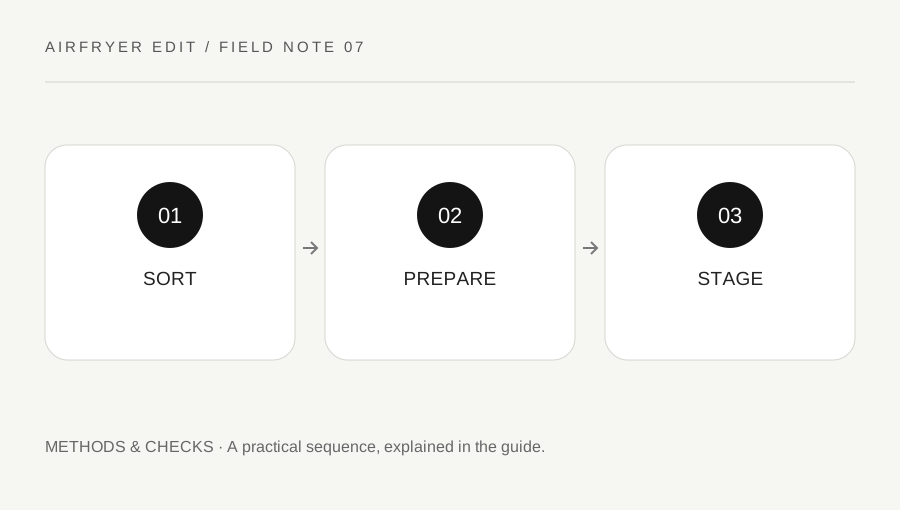
Original explanatory diagram. Examples illustrate a method or decision; they are not claims of personal testing.
List the actual ingredients
Write down the vegetables and their approximate piece shapes. A dense root-vegetable chunk and a thin leaf edge respond differently to the same exposure. Frozen and fresh ingredients can also start in different conditions. Do not treat a mixed bag as identical to a recipe for one fresh vegetable.
Wash and prepare produce using appropriate food-handling guidance. Keep raw meat and its utensils separate from ready-to-eat ingredients. Check the appliance's permitted load and any instructions for lightweight pieces, oils or accessories. A food mixture still needs an arrangement the model supports, not only an appealing ingredient list.
Choose comparable preparation where possible
Follow the supported recipe's size and shape instructions. Similar thickness can make checks easier, but cutting every ingredient into the same visible width does not guarantee identical cooking behavior. Avoid creating tiny fragile pieces merely to match a dense ingredient's finishing time.
Keep the planned texture in mind. A vegetable intended to retain some structure need not be treated like one intended to soften completely. These are culinary preferences, while any applicable food-safety requirement remains separate. Do not claim a particular cut produces a tested time unless you have an actual verified recipe or documented trial.
Use stages or separate batches deliberately
If a supported method adds ingredients at different stages, prepare each portion in advance and keep the handling process clean. Note which stage belongs to which ingredient. If no suitable mixed method is available, separate preparation can be easier to control than repeatedly rescuing over-browned pieces from an incompatible mixture.
Do not overload the basket to keep everything together. Shake or turn only as the recipe and manual direct, using safe hot-equipment handling. Check the food's actual condition at the supported stage. A timer is a reminder to inspect, not proof that every piece has reached the desired result.
Compare a mixed-bowl example
Suppose a bowl contains thick carrot pieces and very thin pepper strips. The strips may reach their preferred surface condition before the denser pieces are ready. The next plan could use a supported staged method, different preparation sizes or separate batches. Raising heat to hurry the carrots can worsen the pepper surface.
For a genuine repeat trial, change one preparation variable and record the actual sizes, load and observations. Keep the method modest and reproducible. This guide offers a planning framework, not an invented mixed-vegetable recipe with guaranteed minutes. A clear ingredient map and staged checks are more useful than a single borrowed timer value.
Make an ingredient-stage map
Draw a small table with ingredient, starting condition, approximate cut and recipe stage. Put dense pieces and fragile pieces on separate rows even when they share a bowl later. Note which supported instruction governs turning or addition. This makes a mixed preparation easier to check than a single line saying vegetables.
After a genuine session, record the result for each ingredient rather than averaging the bowl into one rating. One item can be over-browned while another remains firmer than intended. For the next attempt, choose a supported preparation change that addresses that specific mismatch. If no compatible staged method is available, use separate preparation. The table should preserve uncertainty honestly: planned, observed and verified are different statuses. A precise note supports a repeatable household meal without manufacturing a tested universal recipe from a collection of unrelated ingredient timings.
A practical checklist
Choices are saved in this browser. Reset them here or clear this site’s browser storage.
Questions that come up
Do equal-size pieces always cook equally?
No. Ingredient structure, moisture and starting condition still differ. Comparable preparation can help, but it does not make every vegetable interchangeable.
Can I use one vegetable’s timing for a mixture?
Use a supported mixed method or plan separate stages. A timer for one ingredient does not establish that every other ingredient will reach the same result.
Should I turn the heat up when one ingredient lags?
Review the method and arrangement first. Higher heat can brown fragile pieces faster without solving the mismatch. Separate or staged preparation may be more appropriate.
References & scope
Background references checked on 18 October 2026. Worked examples and diagrams are original teaching material.