Air Fryer Salmon with Lemon and Paprika
Two modest salmon portions make a straightforward dinner with a short ingredient list. The thickness of the fish matters more than an exact minute on the timer. Use the cooking window to know when to begin checking, and a food thermometer to confirm the centre has reached the safe temperature.
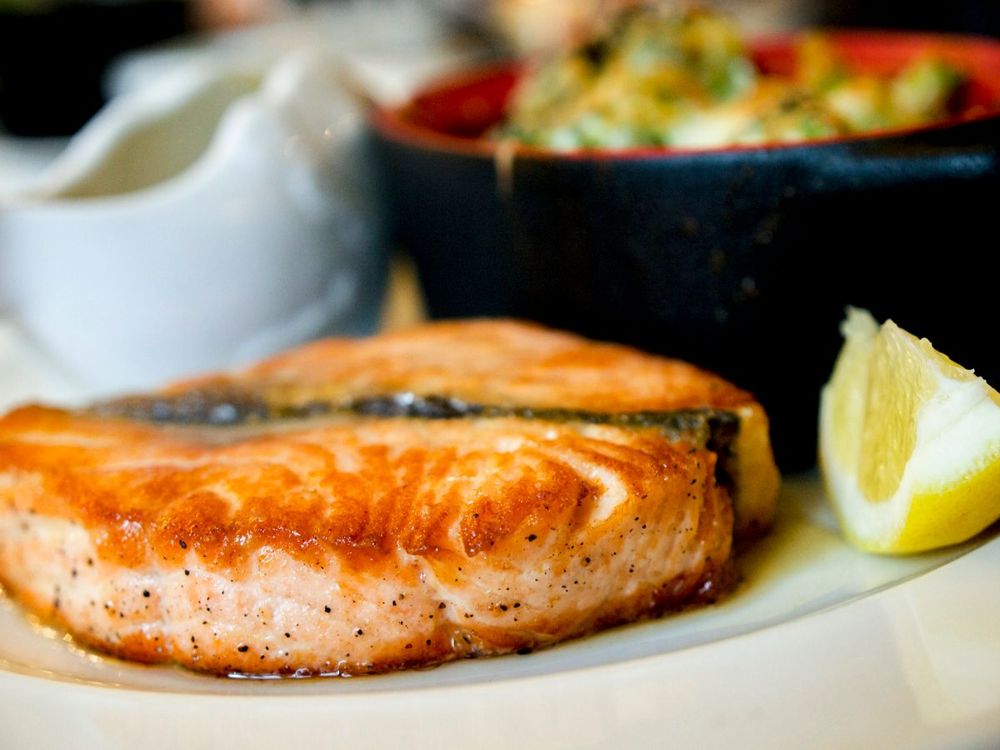
Photo: Krisztina Papp · Photo license. Reference food photography; serving details may differ from the recipe.
Ingredients
US kitchen measures and practical metric equivalents. For cans, the weight is the package size before draining unless stated otherwise.
| Ingredient | US measure | Metric |
|---|---|---|
| salmon, thawed if frozen | 2 fillets, about 6 oz each | 2 fillets, about 170 g each |
| olive oil | 2 tsp | 10 mL |
| sweet paprika | 1/2 tsp | 2.5 mL |
| fine salt | 1/4 tsp | 1.25 mL |
| cut into wedges | 1/2 lemon | 1/2 lemon |
Ingredient notes: Contains fish. Optional yogurt sauce contains milk; check other sauces separately.
Step-by-step method
- Thaw frozen salmon safely before using this timing guide. Pat the portions dry with paper towel and check for pin bones. Keep raw fish and its utensils separate from the cooked serving plate and ready-to-eat vegetables.
- Check the appliance directions and preheat to 390°F (199°C) if required. Brush a little of the oil over the basket surface if the manual permits it. Do not rely on an unsupported loose liner.
- Rub the remaining oil over the fish and sprinkle with paprika and salt. Place the portions skin-side down, if they have skin, with a gap between them. Avoid bending or stacking pieces to make them fit.
- Air fry for an estimated 7–10 minutes, beginning your checks earlier for a thin tail portion. Very thick pieces may need longer. Follow the appliance instructions about whether turning is needed; handle the fish gently if you do turn it.
- Insert a suitable food thermometer into the thickest part, approaching from the side where useful. Cook the salmon to 145°F (63°C). If it has not reached that point, continue in short intervals rather than judging safety by the colour alone.
- Lift onto a clean plate with a broad spatula. Add lemon at the table and serve with a side you have prepared separately. Set aside leftovers promptly using the storage guide; keep the raw-fish board away from the finished meal.
Choose portions that cook together
Two fillets of similar thickness are easier to manage than a thin tail piece beside a tall centre cut. If the pieces are different, check each one and remove it when done instead of waiting for both to finish at the same time. A basket large enough for two portions may still need a batch approach when the fillets are wide. The estimated time here assumes thawed fish, not a frozen block or a whole side of salmon.
Build a complete plate without another recipe
Prepare cooked rice, couscous or potatoes while the fish is cooking, following the package or an appropriate separate method. Add a vegetable that can be served simply, such as steamed green beans or a cucumber salad. Keep the lemon and any sauce separate until serving. Yogurt with chopped herbs is an optional topping, but introduces milk; a commercial sauce may contain other allergens. The fish itself is a major allergen.
Troubleshoot before adding more heat
If the outside darkens before the centre is ready, use a less heavily seasoned surface or a gentler setting next time, within your appliance guidance. If the fish sticks, let it sit briefly before lifting and use a suitable spatula rather than pulling at one corner. The goal is a properly cooked portion, not a fixed visual pattern. This illustration represents the ingredients and does not show a tested finished plate.
Your quick checklist
- Read the whole method and measure the ingredients before heating.
- Check your appliance instructions and leave room for air to circulate.
- Use the doneness checks in the method; the clock is only a starting guide.
Common questions
Can I use frozen salmon straight from the freezer?
Not with the timing range given here. Thaw safely first, or use a complete method specifically designed and validated for frozen portions.
Can I cook it to a lower temperature?
This page follows the FoodSafety.gov endpoint of 145°F (63°C) for fish. We do not recommend a lower endpoint as equivalent.