Air Fryer Tofu Cubes with a Light Cornstarch Coating
Firm tofu, a small amount of soy sauce and a thin starch coating make an adaptable starting point for a rice bowl. This is a texture-focused method, not a promise that every tofu brand will crisp in the same way. Choose firm or extra-firm tofu and keep the cubes large enough to handle easily.
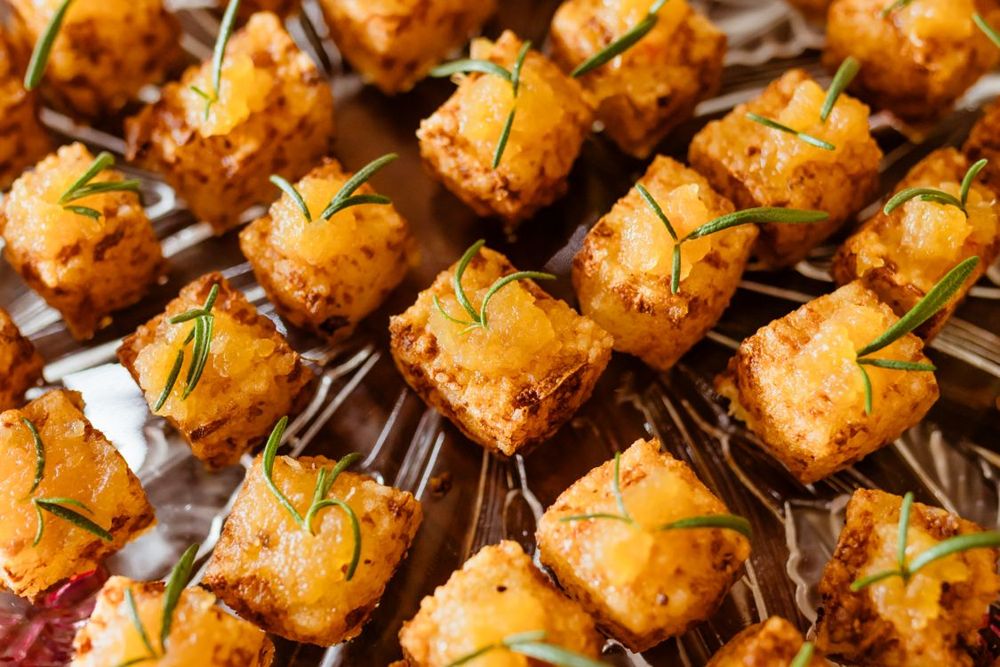
Photo: Jonathan Borba · Photo license. Reference food photography; serving details may differ from the recipe.
Ingredients
US kitchen measures and practical metric equivalents. For cans, the weight is the package size before draining unless stated otherwise.
| Ingredient | US measure | Metric |
|---|---|---|
| firm or extra-firm tofu, drained | 1 package (14 oz) | 400 g |
| soy sauce | 1 tbsp | 15 mL |
| neutral cooking oil | 2 tsp | 10 mL |
| cornstarch | 1 tbsp | 8 g |
| garlic powder | 1/2 tsp | 2.5 mL |
Ingredient notes: Contains soy. Standard soy sauce commonly contains wheat; read the label.
Step-by-step method
- Drain the tofu and press gently between clean towels for about 10 minutes, or follow the package directions. Avoid crushing it under excessive weight. Cut into roughly 3/4-inch (2-cm) cubes so the pieces remain easy to turn.
- Set the air fryer to 390°F (199°C), preheating if the manual calls for it. Check that the basket openings will support the cubes without letting small pieces fall through.
- Toss the tofu gently with soy sauce and oil in a wide bowl. Sprinkle over cornstarch and garlic powder, then turn the cubes with a soft spatula until lightly coated. A fine layer is preferable to thick white patches.
- Arrange the cubes in a single layer with gaps. Cook for an estimated 14–18 minutes, turning or shaking gently around halfway through. If they stick initially, loosen carefully rather than scraping the coating off.
- Check for lightly browned corners and a heated centre, extending the time in short intervals if needed. Watch closely near the end because small cubes and different brands can brown at different rates.
- Serve with cooked rice and vegetables. Add a sauce at the table, tossing only the portion you intend to eat immediately. Follow the linked handling and storage guide for the remainder.
Firmness and pressing
Silken tofu has a different structure and is not a direct replacement here. Even among firm blocks, water content varies. Gentle pressing removes some surface moisture and helps the coating spread, but it does not turn every block into an identical ingredient. If your tofu crumbles during mixing, use a firmer variety next time and turn with a spatula instead of shaking a narrow bowl. A few broken corners can still be served in a bowl.
Keep the sauce for the finish
The soy sauce in the coating is deliberately modest. A generous wet glaze is more useful after cooking, when you can control the amount on the finished dish. Try a separately mixed lemon and soy dressing, or serve with a sauce you already enjoy. Standard soy sauce often contains wheat as well as soy. For a specific dietary requirement, check the exact bottle and every added ingredient; this page does not label the recipe allergen-free.
Use leftovers thoughtfully
The coating softens when enclosed with wet vegetables or sauce. If you are preparing another meal, keep the components in separate suitable containers where practical, and use the linked cooling and refrigeration guidance. Reheat the portion you need using an appropriate method rather than repeatedly warming the whole batch. The recipe gives no nutritional or weight-loss promise, and its illustration is an ingredient drawing rather than a product or texture certification.
Your quick checklist
- Read the whole method and measure the ingredients before heating.
- Check your appliance instructions and leave room for air to circulate.
- Use the doneness checks in the method; the clock is only a starting guide.
Common questions
Can I leave out cornstarch?
Yes, but the surface will be different. Keep the cubes dry and spaced out, and expect less of a thin crust.
Why is the coating powdery?
It may be too thick or unevenly distributed. Use the measured amount, mix gently and avoid leaving dry piles of starch on individual cubes.