Frozen Food in an Air Fryer: Read the Package Before Converting the Method
A frozen food can look ready to eat while still requiring complete cooking. Read its label, identify whether it is raw or fully cooked and use a preparation method the package and appliance guidance support. A universal oven-to-air-fryer conversion cannot supply those missing facts.
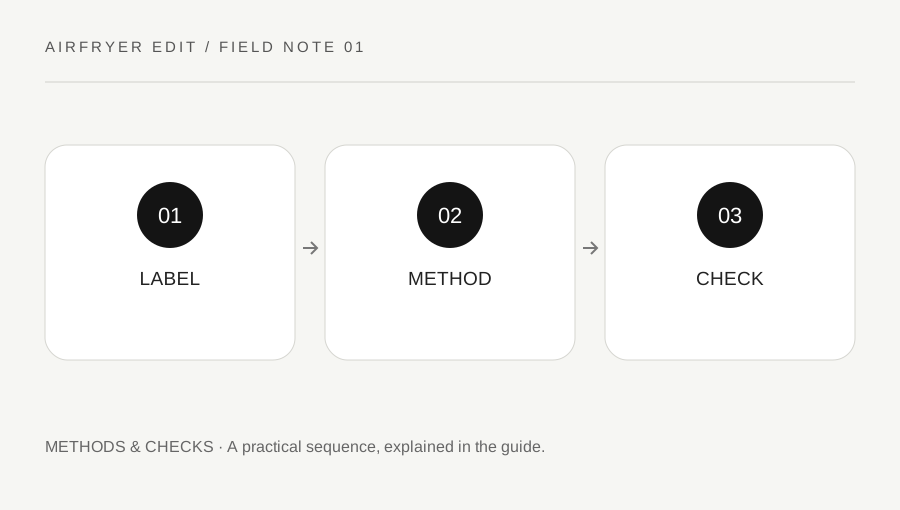
Original explanatory diagram. Examples illustrate a method or decision; they are not claims of personal testing.
Identify the product state
Look for statements such as raw, fully cooked, cook from frozen and do not thaw. Breaded poultry is especially easy to misjudge by appearance, so never use a browned coating as evidence that the centre is already cooked. Keep the packaging until preparation is complete and check any recall information relevant to the product.
The freezer keeps food cold; it does not make a raw item ready to eat. Handle raw frozen products with the same attention to clean hands, separate utensils and uncontaminated surfaces as their unfrozen counterparts. Do not place cooked food back on a plate that held raw food unless the plate has been properly cleaned.
Use a supported preparation method
If the package gives air-fryer directions, follow its stated load, temperature, turning and standing instructions with the actual appliance manual. If it specifies a different method only, do not assume a percentage reduction in oven time creates an equally validated process. Ask the manufacturer or use the supported method.
Check that the portion size fits without exceeding appliance limits. A package direction can assume a particular amount or arrangement. Doubling the contents in one basket changes exposure and heating, even when the display temperature remains the same. Air circulation and the thickest centre need attention separately from visible browning.
Verify the endpoint appropriately
For foods with a safe internal-temperature requirement, use a suitable food thermometer and the relevant current guidance. Poultry needs 165°F or 74°C under US guidance. Different food categories can have different requirements and rest instructions, so identify the product rather than applying one number to every ingredient.
Check several representative pieces or the thickest locations as appropriate. Avoid touching the probe to the hot basket and mistaking that reading for the food centre. Follow thermometer instructions and clean it between raw-food checks and ready-to-eat handling. Time and colour remain process clues, not substitutes for the required endpoint.
Work through an unfamiliar package
Imagine a frozen breaded chicken product whose label specifies oven preparation and says it is raw. The tempting shortcut is to use a generic air-fryer chart until the outside looks crisp. The careful choice is to follow the supported package method or obtain product-specific air-fryer guidance, then verify the poultry endpoint.
Record the product name, portion, appliance and supported instructions if you plan to repeat it. Do not publish that observation as a personally tested recipe unless you actually performed and documented the test. Our guide supplies a decision process, not invented cooking times for every frozen product. A correct label interpretation is often the most important step before the appliance is switched on.
Make a package-to-process checklist
Before opening the package, write four short lines: product state, supported method, permitted amount and required endpoint. Copy the exact preparation distinction without rewriting it as a general recommendation. If the package has multiple methods, select one complete method rather than mixing a temperature from one with a time from another.
Check whether directions refer to the whole package or a smaller portion and whether any standing period is part of the process. Keep the label available until the food has been prepared and served. For a repeat purchase, check again because product formulations and directions can change. An old note is useful context, not authority over the current package. If the instructions are damaged or unreadable, obtain the manufacturer's current information instead of guessing from a similar-looking product. This small checklist makes missing information visible before cooking begins.
A practical checklist
Choices are saved in this browser. Reset them here or clear this site’s browser storage.
Questions that come up
Can I always reduce oven time by a fixed percentage?
No. A general conversion does not validate a product-specific cooking process, especially for raw frozen foods. Follow supported package and appliance instructions and verify the required endpoint.
Does a brown breaded coating mean cooked poultry?
No. Appearance cannot establish the safe centre temperature or the product’s original state. Read the raw or fully cooked label and use a food thermometer where required.
Should I thaw everything first?
No. Follow the product’s instructions. Some products specify cooking from frozen, while others require a documented thawing method. Do not invent an intermediate step from appearance alone.
References & scope
Background references checked on 18 October 2026. Worked examples and diagrams are original teaching material.