Clean an Air-Fryer Basket by Its Coating and Model Instructions
A basket can be removable without every part being dishwasher-safe. Check the exact model and coating guidance, let the appliance cool safely and use a suitable cleaning method. Avoid turning a small stuck-on patch into damaged food-contact equipment.
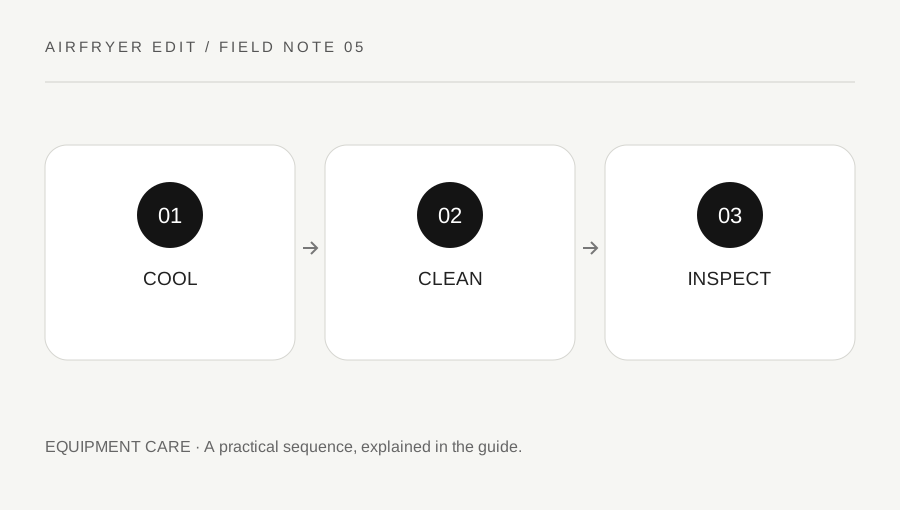
Original explanatory diagram. Examples illustrate a method or decision; they are not claims of personal testing.
Prepare the appliance for cleaning
Switch off and unplug as the manual directs, then allow the required cooling period before handling. Keep the electrical base out of water. Remove only the parts intended for user removal; do not dismantle heating or electrical assemblies to reach a crumb.
Read which components permit handwashing or dishwasher cleaning. A basket, drawer pan, rack and handle assembly may have different guidance. An instruction for another model in the same brand is not enough. Keep any detachable small parts together and protect the counter from residual heat and greasy water.
Use a compatible gentle method
Follow the maker's recommended detergent, sponge and soaking procedure. Abrasive pads, sharp scrapers or harsh cleaners can damage some coatings. Do not assume stronger chemistry is the answer when residue resists a first gentle pass. Check the manufacturer's stuck-on-food guidance before escalating.
Avoid immersing parts whose construction does not permit it, and do not let water enter the electrical base. Clean accessible exterior surfaces only as directed. If residue is near a heating element or internal area outside normal user access, consult support rather than probing with a metal tool.
Inspect after cleaning and drying
Dry permitted parts thoroughly and inspect for cracks, loose fittings, peeling coating or damaged seals. A liner does not make a damaged basket safe to continue using. Contact the manufacturer for an appropriate replacement or assessment where the food-contact surface is deteriorating.
Reassemble in the intended order and check that the drawer seats normally. Do not run a wet or incorrectly assembled appliance merely to test whether the pieces fit. Keep vents and external clearances unobstructed. If the manual specifies an additional drying or first-use process, follow that exact model guidance.
Work through a recurring residue problem
Suppose a sugary sauce repeatedly hardens on the basket after cooking. Clean it with the supported method, then review the recipe's application stage and amount. A sauce added too early may create unnecessary cleanup and excessive exterior browning. The solution may be a supported finishing method, not a more abrasive scrubber.
Record which ingredient and process produced the residue if you actually observed it. Do not claim personal testing from a general explanation. Regular appropriate cleaning can keep the equipment easier to inspect, while persistent smoke, damage or an electrical fault needs manufacturer support rather than an internet cleaning experiment.
Separate cleaning, inspection and fault reporting
Make three short checks after the parts are cool: what residue needs the approved cleaning method, what damage is visible after cleaning and whether the appliance still assembles normally. These are separate observations. A greasy film can hide a coating defect, while a cosmetic stain is not necessarily peeling material.
If you contact support, provide the model, component, clear photograph and cleaning products used. Keep electrical symptoms separate from food residue. Do not run the appliance repeatedly to demonstrate a suspected fault, and do not open the electrical housing for a better photograph. Ask the manufacturer for the next appropriate step. A complete cleanup record need not be long; its value is that another person can distinguish an ordinary maintenance need from a damaged part or an operating problem. Appropriate inspection helps prevent a stronger cleaner from being used against a fault that cleaning cannot resolve.
A practical checklist
Choices are saved in this browser. Reset them here or clear this site’s browser storage.
Questions that come up
Are all removable baskets dishwasher-safe?
No. Check the exact component and model instructions. Removability does not establish dishwasher compatibility.
Can I scrape residue with a knife?
Do not use an improvised sharp scraper on a coating. Follow the manufacturer’s stuck-on-food method and stop if the surface is damaged.
What if the coating is peeling?
Stop treating it as a cleanup problem. Ask the manufacturer about assessment or replacement. A liner is not a repair for deteriorating food-contact equipment.
References & scope
Background references checked on 18 October 2026. Worked examples and diagrams are original teaching material.