Air Fryer Capacity: A Single Layer Is a Layout, Not Just a Weight
A basket’s advertised volume does not tell you how every ingredient will fit. Shape, depth and the manufacturer’s permitted loading arrangement affect cooking. Measure the practical layout for the food you are preparing instead of treating one weight as a universal batch size.
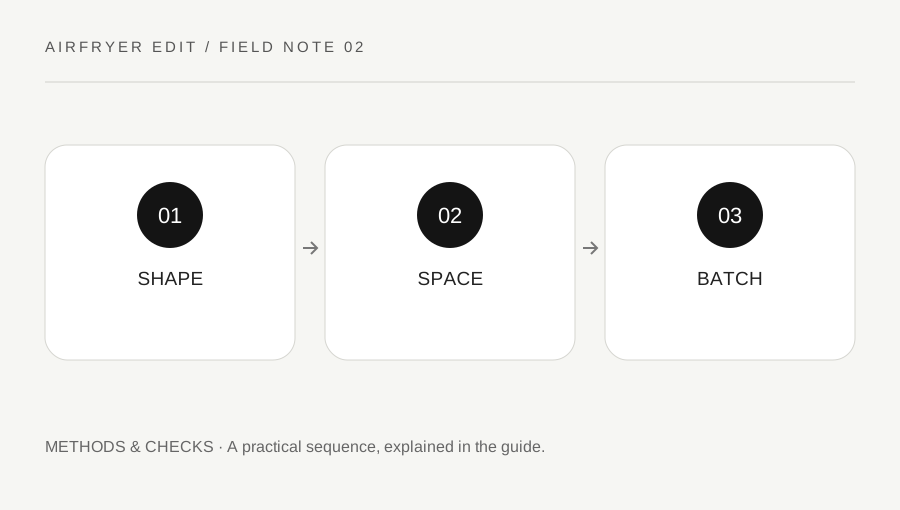
Original explanatory diagram. Examples illustrate a method or decision; they are not claims of personal testing.
Read the model’s loading guidance
Find the maximum load and any ingredient-specific instructions in the actual manual. A pile of small chips, a single layer of breaded pieces and an accessory dish are different arrangements. Do not assume a recipe for another basket shape transfers unchanged simply because both appliances list the same litre capacity.
Keep vents and clearances as the manufacturer specifies. Overfilling can interfere with circulation and make turning difficult. The basket should remain manageable when hot, and food should not approach the heating element outside the permitted arrangement. If the manual does not support a stacking accessory, do not improvise one from unrelated kitchen hardware.
Compare surface area and thickness
Two portions with equal weight can occupy very different space. Thick compact pieces may leave gaps around them while many thin pieces cover the base. Pieces touching or overlapping can develop different surfaces from those with clear exposure. This affects texture and can also complicate uniform heating.
Arrange the food according to the recipe and appliance guidance, leaving the intended circulation paths. Use similar piece sizes where the preparation permits it. Do not solve an overcrowded basket by raising the temperature aggressively; the outside may brown faster without addressing the centre or inaccessible contact surfaces.
Plan the extra batch deliberately
If the supported layout holds only part of the food, divide it into batches and keep uncooked perishable portions refrigerated until needed. Prepare clean utensils and a safe serving plan for completed food. Do not let the first batch sit indefinitely at room temperature while repeatedly adding more batches.
FoodSafety.gov recommends keeping hot food at 140°F or 60°C or warmer when holding it, using an appropriate method. Prompt service can be simpler for a small household meal. If safe hot holding is unavailable, redesign the quantity or schedule rather than assuming the air-fryer basket is a validated holding cabinet.
Use a layout example
Suppose six similar breaded pieces overlap in your basket while four fit in the package's intended arrangement. The useful plan is a supported four-piece batch followed by a smaller batch, not forcing all six into a thick stack. Check each batch according to the product instructions and required food endpoint.
Keep a sketch or photograph of the successful load only if you actually prepared it. Note piece size and product, not just total grams. A future product with thicker pieces can require a new assessment. This guide explains how to make the loading decision; it does not claim that four pieces is suitable for every model or food.
Describe the usable layout in a note
A useful capacity note can say which product, piece size and arrangement the supported method used. Distinguish the basket's base area from its maximum fill line. A deep load that is permitted for one ingredient is not automatic permission to stack another ingredient that calls for a single layer.
When comparing appliances, measure only when the equipment is cool and disconnected as appropriate. Do not put a ruler inside a hot operating chamber. Keep accessories in the description because a rack or dish changes the usable arrangement. If a household regularly needs more food than one supported load, plan batches or another method rather than treating repeated overcrowding as a recipe adjustment. The practical capacity is the amount you can prepare with the intended arrangement, endpoint checks and manageable handling, not the largest amount that can physically be squeezed into the drawer.
A practical checklist
Choices are saved in this browser. Reset them here or clear this site’s browser storage.
Questions that come up
Does a larger litre number guarantee a bigger single layer?
No. Basket base shape and dimensions matter. Compare the actual supported arrangement and food shape, not only the advertised volume.
Can I raise the temperature to fix overcrowding?
That does not reliably address blocked circulation or uneven heating. Use the supported load and verify the food endpoint instead of relying on faster exterior browning.
Should the first batch stay in the basket?
Only use a holding function as the manufacturer directs and verify safe holding conditions where required. Otherwise serve promptly or use an appropriate separate method.
References & scope
Background references checked on 18 October 2026. Worked examples and diagrams are original teaching material.