Sauce and Seasoning in an Air Fryer: Separate Cooking from Finishing
A wet coating, dry seasoning and final sauce do different jobs. Their timing affects surface exposure, browning and cleanup. Follow a supported recipe and food-safety process instead of treating every flavouring as something to add before the basket closes.
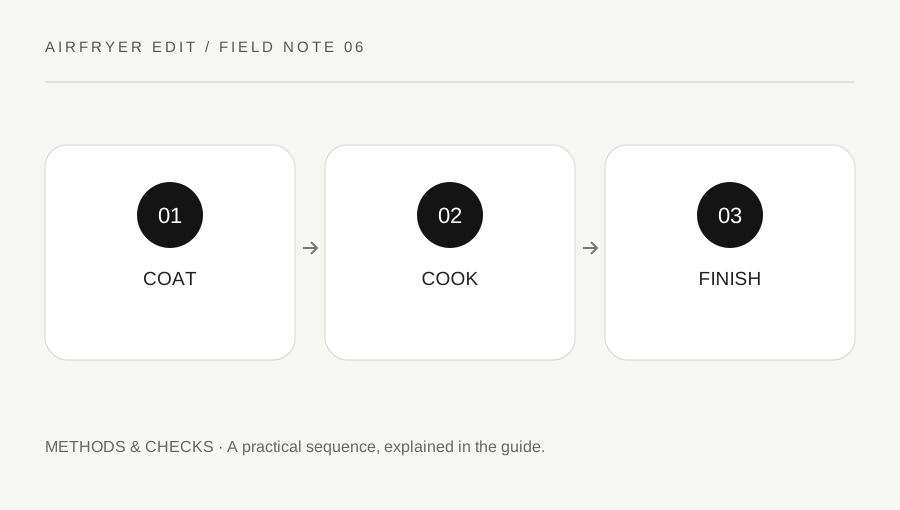
Original explanatory diagram. Examples illustrate a method or decision; they are not claims of personal testing.
Identify what the coating adds
A dry spice mixture can distribute flavour, while a wet marinade introduces moisture and sometimes sugar or other ingredients that brown readily. A thick sauce can pool or obscure the surface. These are practical process differences, not a reason to invent a universal rule for every recipe.
Read the appliance guidance about oils, loose ingredients and supported preparations. Avoid adding large quantities of liquid to a basket designed for another use. Keep food-contact and allergen information from packaged sauces available, particularly when cooking for someone with a dietary restriction.
Keep raw marinade separate
If a marinade has contacted raw meat or poultry, do not use it directly as a ready-to-eat finishing sauce. FDA guidance calls for appropriate treatment before reuse; the simplest household plan can be reserving a separate uncontaminated portion before raw food is added. Use clean containers and utensils.
Marinate perishable food under proper refrigeration according to the product and food-safety guidance, not on the counter to save time. A flavouring step does not replace a required cooking endpoint. Check the appropriate internal temperature for the actual food regardless of how dark or glossy the coating becomes.
Follow the supported finishing stage
A recipe may call for sauce after cooking or for a specific later stage. Follow that method and verify whether any return to heat is required. Do not assume a short final glaze stage makes undercooked raw food safe. The main cooking process still needs its appropriate endpoint.
Apply a controlled amount with clean tools and consider whether a sauce should remain separate at service. A separate serving sauce can preserve a crisp texture and make portions easier to adjust, when the dish and dietary needs allow it. This is a serving choice, not a tested claim that every food will stay crisp for a particular number of minutes.
Use a practical troubleshooting example
Imagine a supported recipe whose exterior becomes very dark while the centre is not ready. One possible variable is an early sugary coating. Review the actual recipe, load and appliance instructions rather than raising the heat further. Use the required food-temperature check and a supported method to complete cooking.
For the next genuine trial, change one variable such as the recipe-approved sauce stage and record the result. Do not alter several factors and then claim to know which solved the issue. Our guide explains the distinction between cooking and finishing; it does not supply invented test results or a universal air-fryer sauce timetable.
Plan clean tools for the final stage
Set aside the finishing sauce and its serving utensil before raw-food preparation begins. Label the clean portion if several similar bowls are present. A brush used on raw poultry should not later touch the ready-to-eat serving sauce without appropriate cleaning and handling.
Write the recipe's intended sauce stage beside the cooking steps. If you change a dietary ingredient, check whether its sugar, salt or moisture content changes the supported method rather than assuming the substitution is identical. Allergen suitability also needs the actual package information, not a generic ingredient name. At service, use a clean plate and avoid returning cooked food to a raw marinade container. This simple separation prevents a flavouring choice from creating a cross-contamination problem and keeps the finishing step easy to perform without rushing over a hot open basket.
A practical checklist
Choices are saved in this browser. Reset them here or clear this site’s browser storage.
Questions that come up
Can dark sauce prove the food is cooked?
No. Exterior colour does not establish the internal endpoint. Use the appropriate food-safety check for the actual ingredient.
Can raw marinade become the serving sauce?
Do not serve it untreated. Follow official safe-use guidance or reserve a separate uncontaminated portion before raw food contact.
Should every sauce be added at the end?
No universal timing suits every supported recipe. Follow its specified process and the appliance guidance, while keeping raw-food handling separate from finishing.
References & scope
Background references checked on 18 October 2026. Worked examples and diagrams are original teaching material.